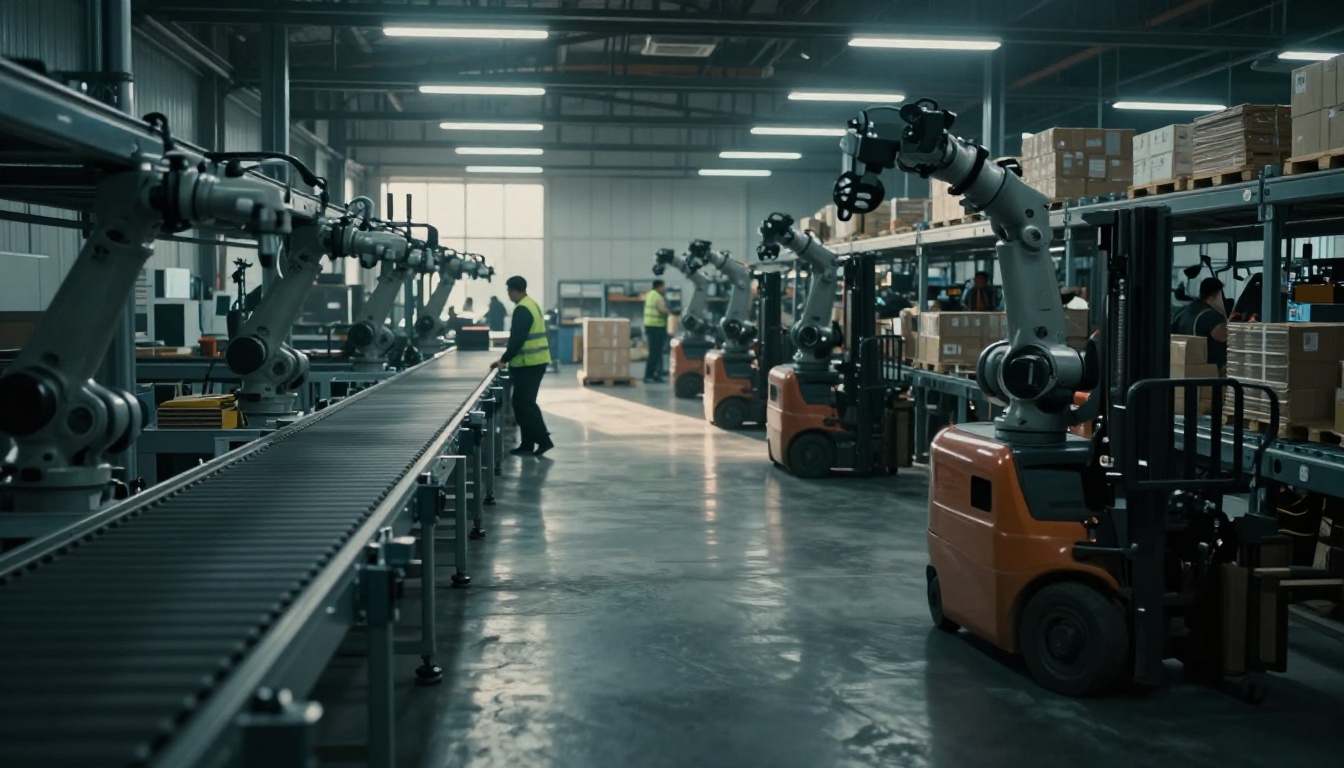
A busy e-commerce warehouse during peak season can move thousands of packages every day. Tractors, forklifts, conveyors, and people all have to work like one machine. If one part lags, costs climb and delivery windows slip.
So, how do warehouses handle large volumes of goods? They rely on warehouse automation plus tight inventory management. The goal isn’t just speed. It’s predictable flow, fewer mistakes, and better use of labor.
In 2026, more operations are investing in robotics and software planning. About 25% of warehouses use some automation, and 10% already run advanced AI in planning and execution. That jump matters when order spikes hit fast.
Next, you’ll see how the same warehouse handles the work from inbound receiving all the way to outbound shipping.
Streamlining Receiving to Handle Incoming Freight Fast
Inbound is where big volumes test your whole system. If receiving falls behind, everything after it gets messy. Pallets stack up, docks idle, and pickers start their day without full inventory.
Modern warehouses reduce that bottleneck by automating the first mile. They use robotic unloading tools to take freight apart quickly and verify key details as items land. Then software routes each unit to the right storage zone or staging area.
In many sites, robots handle the heavy lifting work, while people focus on exceptions. Those exceptions might include damaged cartons, missing labels, or unusual product dimensions. That balance helps you keep moving without turning the dock into a full-time triage center.
A useful way to think about this shift is like changing from hand-sorting to “assembly-line accuracy.” Instead of one person scanning and sorting every box, the system checks as it moves. DC Velocity’s 2026 overview of warehouse automation trends highlights how automation increasingly supports both throughput and accuracy during peak periods: warehouse automation trends in 2026.
Here’s what this looks like in real receiving flow:
- Trucks back into a dock with a planned arrival window.
- Pallets roll in, and robots start de-palletizing.
- Vision systems check barcodes and package features.
- A sorter directs each unit to the next step.
- Warehouse management software (WMS) updates location or staging status.
This whole setup aims to cut manual touches early. In 2026, that matters even more because labor shortages push many leaders to expand automation quickly. One realtime trend summary notes that about 87% of leaders plan to expand warehouses with automation by 2026.
That receiving pace also helps reduce misplacements. When products enter cleanly, inventory management stays accurate later.
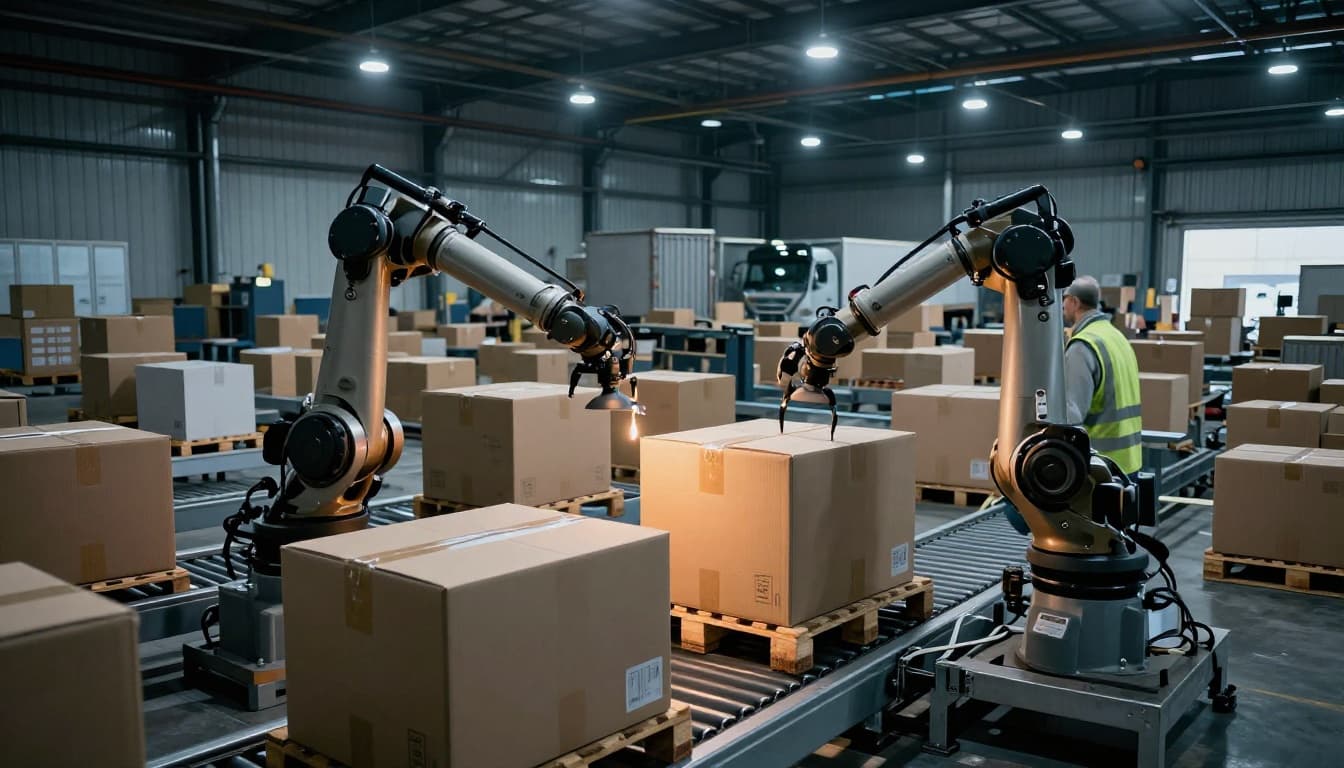
Robots and AI Taking Over Unloading Duties
Older methods often depended on workers to break down pallets and sort boxes by hand. That works, until you face mixed cartons, different sizes, and nonstop truck cycles.
Robotic de-palletizing changes the math. With AI vision, robots can identify many carton types and still pick the right handling method. Some systems also run quick quality checks at the same time, like verifying barcode readability or spotting obvious damage.
The benefit is speed without guessing. Robots can grab different box sizes safely and place them onto conveyors or into tote flows. Meanwhile, a small team watches the system and handles exceptions.
It also supports flexibility. If one truck brings mostly case packs while the next brings mixed consumer cartons, the workflow can adjust without a full redesign.
AMRs Moving Goods Straight to Storage
After unloading and sorting, the biggest waste is often idle time and travel time. People spend minutes walking, pushing carts, and waiting for routes.
Autonomous mobile robots (AMRs) fix that by moving pallets or totes to storage staging areas. Instead of humans moving each load across the warehouse floor, AMRs take on the movement work.
That helps in two ways:
- Higher throughput: AMRs can keep moving while people handle exceptions.
- Lower congestion: Traffic planning reduces blocked aisles near docks and pick zones.
AMRs also support hybrid setups. They work alongside fixed storage like conveyors or shelves, so the warehouse doesn’t need one rigid automation layout.
In plain terms, AMRs act like “internal trucks.” They keep goods flowing from the dock to the right place, fast enough to match inbound volume.
Smart Storage Systems That Maximize Every Inch
Storage isn’t just where products sit. It’s where speed gets built or broken.
When volumes jump, storage has to absorb the wave. If your system wastes space, you’ll run out of locations for peak season SKUs. Then you’ll start using overflow areas, and accuracy drops fast.
That’s why many warehouses in 2026 shift toward flexible storage design. Instead of fixed, one-size racks, they install modular automated storage and retrieval systems (AS/RS). These systems can change capacity plans, add modules, and adjust for different product mixes.
A helpful analogy is Tetris. Smart storage groups goods in ways that leave fewer gaps. When demand shifts, the “pieces” move into new patterns without rebuilding the whole board.
Storage software can also plan flows. Digital models, often called digital twins, let teams test layout changes before making costly changes on the floor. Meanwhile, real-time data keeps the system balanced during waves of inbound and outbound demand.
For extra context on how warehouse automation is increasingly software-led, this piece on software and robotics convergence is a good read: software AI and robotics converge.
Modular AS/RS for Flexible Space Use
Automated storage and retrieval systems help warehouses use vertical space. But the real upgrade in 2026 is modular flexibility.
In a modular AS/RS setup, automated units can expand or reconfigure as needs change. Robots or shuttles handle retrieval, then deliver items to pick stations or packing staging.
Because the storage system can scale, you can handle different volume levels. During peak season, you may need more buffer capacity. During slower months, you might refocus on faster replenishment zones.
Instead of “build once and hope,” modular AS/RS lets teams adjust without a full warehouse remodel.
The result is better inventory management. When storage locations match the product plan, WMS updates stay clean. That means fewer lost bins, fewer wrong picks, and fewer rework cycles.
AI and Digital Twins Planning Perfect Layouts
Even the best hardware can underperform if the layout is wrong. That’s where AI planning tools and digital twins come in.
A digital twin is a virtual model of warehouse flow. Teams simulate travel paths, congestion points, robot routes, and replenishment rules. Then they test changes like new pick faces, new dock staging lanes, or updated storage assignments.
AI can also forecast how volumes will move through the building. If outbound demand spikes for a product group, the system can adjust where replenishment should land and how quickly.
In other words, storage becomes dynamic. It’s not just a rack. It acts like part of the execution engine.
Picking, Packing, and Shipping Without the Chaos
Inbound and storage only solve half the puzzle. The real test is order fulfillment. That’s when thousands of line items turn into real shipments, on time.
To handle large volumes, warehouses reduce walking and guessing. They move items to people, or people to items, depending on the site’s design. Then they use software to plan the work, so picks happen in the right sequence.
A common approach is robots-to-goods (R2G). Instead of pickers traveling long distances, the system brings inventory pods, bins, or totes to pick zones. Workers then complete the final steps quickly.
At the same time, automation systems support packing accuracy. Vision systems can inspect cartons, detect label placement issues, and help prevent shipping the wrong item.
Finally, outbound prep uses conveyors, sorters, and pallet handling automation. Auto-wrapping and staging help reduce last-minute confusion.
In 2026, these systems increasingly run as a coordinated team. The warehouse isn’t “robot everywhere.” It’s humans and robots working together, guided by software rules.
Teamwork Between Robots and Pickers
Humans still matter, especially for irregular orders, product variants, and quality exceptions. But the warehouse design changes what humans do.
With R2G, pickers get faster access to inventory. Many sites pair this with hands-free guidance. That might be voice prompts, wearable displays, or handheld apps for scanning.
The key point is task clarity. Workers don’t need to hunt. They don’t need to interpret unclear labels as often. The system pushes the right items to the right place, then asks humans to confirm details.
That reduces error risk during peak days. It also improves throughput without burning people out.
Automated Packing Checks and Outbound Prep
Packing is where mistakes turn into expensive returns. A big-volume warehouse can’t afford repeated rework.
So many operations add checks right in the packing flow. Automated vision sensors can inspect product presence, carton condition, or label readability. Sorters can route the packed items based on destination and service level.
Software also helps prevent jams and misroutes. If a carton fails inspection, the system diverts it to a review lane. That keeps the main conveyor flow running.
Outbound prep often includes palletization automation. Some systems also wrap and stage pallets so carriers can load quickly.
Meanwhile, WMS keeps the record straight. Every scan links to an order line, a location, and a shipping event. That reduces “paper inventory” issues and keeps inventory management accurate.
For one practical reason WMS can make or break execution, see this guide on how master data affects performance: WMS master data matters.
Inventory Tracking and Tech Keeping Everything in Sync
Large volumes create one main risk: losing the truth.
If your warehouse inventory records fall out of sync, everything else suffers. Picks become wrong, replenishment becomes slow, and customer promises break.
So warehouses run inventory tracking at two levels:
- Location accuracy: Where is each SKU or bin?
- Timing accuracy: When did it move, and what’s next?
A warehouse management system ties it together. WMS tracks tasks, putaway rules, and wave planning. In 2026, WMS increasingly gets AI support to adjust plans live.
That matters because volumes change hour by hour. When inbound trucks run late, WMS can shift replenishment tasks. When orders surge, it can rebalance waves or reorder tasks.
The realtime trend summary also notes why AI planning is growing. 60% of warehouses plan 20% bigger AI and robot budgets, and 31% aim for full automation by 2028. That implies AI is no longer experimental. It’s becoming standard planning support.
Some sites also add RFID and real-time location systems (RTLS) to reduce scan gaps and improve counts. Barcode scans are still common, but RFID helps when cartons go through dense flows quickly.
In addition, mobile apps and training tools help teams work the same way. Workers don’t learn by guesswork. They follow task prompts tied to the WMS workflow.
The end goal is a software-defined warehouse rhythm. Goods move, systems update, and teams react to real signals instead of assumptions.
Real Challenges and Smart Fixes for High-Volume Ops
Even with automation, high-volume operations run into predictable problems. Labor gaps. Bad master data. Congested aisles. System downtime. Peak surges that don’t match the plan.
The difference between chaos and control is how fast you fix issues.
Here are smart fixes that show up in 2026 warehouse upgrades:
- Start with bottleneck automation: Improve receiving and replenishment first. That helps the rest of the flow immediately.
- Use AMRs plus clear routing rules: AMRs need traffic logic. Without it, you trade labor for congestion.
- Treat data as a system feature: Wrong SKU details can break picking logic. Clean WMS master data prevents repeat errors.
- Plan maintenance with automation in mind: Robots need uptime. Many teams use software-linked maintenance schedules to reduce surprise stops.
- Build flexible layouts: Modular storage beats rigid racks when product mix changes often.
- Train for exceptions, not just normal work: Workers should know what to do when labels fail or cartons arrive damaged.
A big point from 2026 trend reporting is that software orchestration matters. It’s not enough to add robots. You also need coordination layers that connect WMS decisions to robot behavior.
If you want a clear example of that shift toward software-led orchestration, this overview is on point: warehouse software orchestrates resources.
When those fixes land, warehouses often see faster order filling and fewer mistakes. The realtime trend summary cites reported results like 25% to 30% drops in labor costs and 300% faster order filling when automation supports the work correctly.
That’s the real outcome: less friction at scale, and more reliable delivery.
Conclusion: Peak volume is a system design problem
Back at the start, the key question was simple: How do warehouses handle large volumes of goods? The answer isn’t one machine. It’s a connected workflow.
Receiving automation, AMRs for movement, flexible storage, and coordinated picking and packing all work together. Then WMS and tracking tech keep inventory management in sync when things change fast.
If you’re planning upgrades, focus on the flow where delays start. Fix inbound first, then storage accuracy, then picking chaos. That approach matches what many warehouses are doing in 2026 as automation expands.
What part of your operation slows down first during peak season, receiving, replenishment, or shipping?