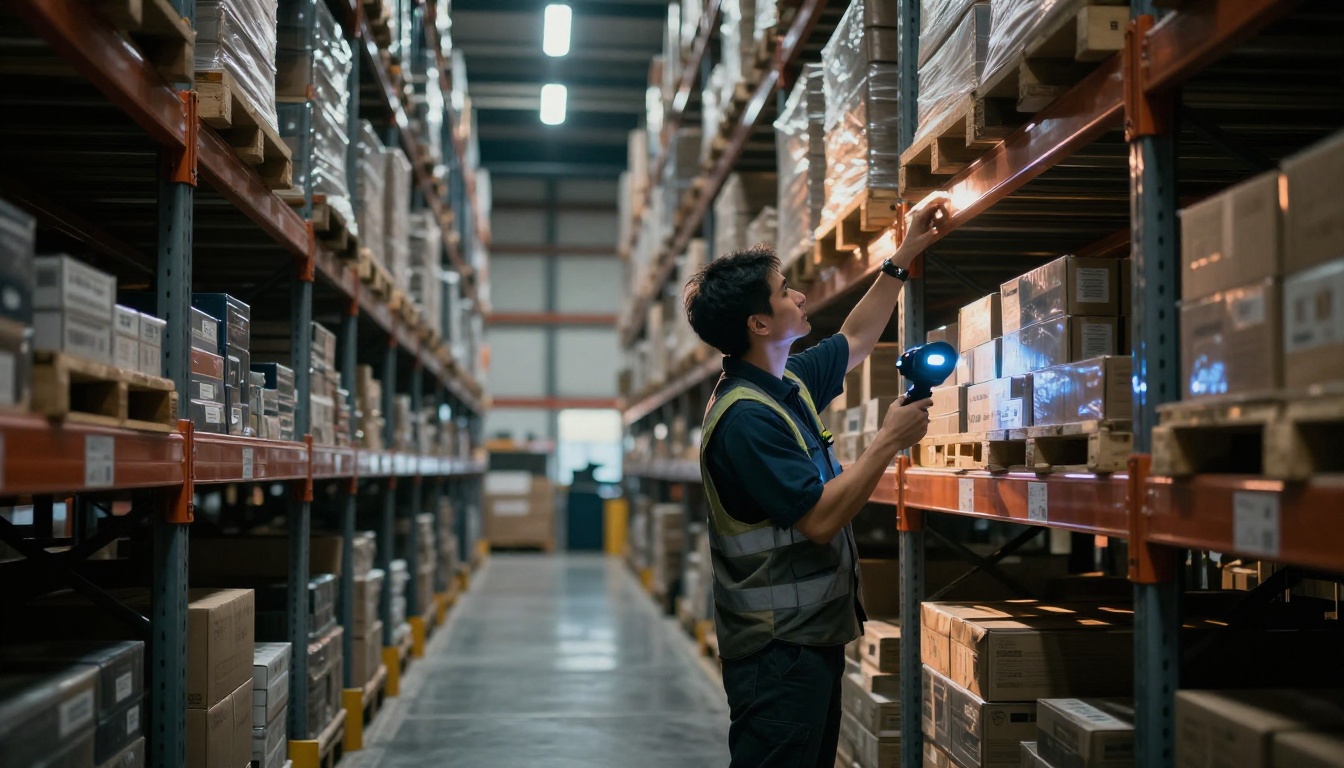
Fast shipping starts long before a box hits a truck. It starts when someone grabs the right items from the right shelves, at the right time. In many warehouses, order picking takes up a huge share of effort and cost.
Order picking is the process of selecting products from storage to complete customer orders. If it runs well, orders move fast. If it runs poorly, packing slows down, mistakes rise, and customers wait longer.
So how do you do order picking the right way, day after day? This guide breaks down the order picking process step by step. You’ll also learn the main picking methods, what tech is changing in 2026, and practical tips that cut errors without slowing people down.
What Exactly Is Order Picking and Why Does It Matter?
Think of your warehouse like a giant store. Instead of customers wandering around aisles, warehouse workers follow a plan to find products fast. That plan leads into the order picking process, where each order gets its items from storage.
Order picking matters because it sits between inventory and shipping. When the right items show up at packing on time, shipping looks easy. When picking falls behind, everything after it starts to queue up.
Here’s why managers pay so much attention to picking. Research cited in warehouse strategy write-ups often puts order picking around 55% of operating expenses for distribution centers. In plain terms, picking is one of the biggest drains on labor time, money, and throughput.
For e-commerce and retail, the pressure is even higher. Customers expect next-day or same-day delivery. That means orders hit the floor in waves, not at a calm pace. Also, products vary in size and handling needs, so a single “one-size” pick plan rarely fits all.
Order picking also drives your accuracy rate. One wrong scan can send the wrong item to the customer. Then you pay for rework, refunds, or returns. When picking is slow, people rush. When people rush, errors grow.
Small improvements can help a lot. Better layouts reduce walking. Clear labels reduce searching. Solid workflows reduce “extra steps” that look harmless until they happen thousands of times per shift.
If you want a deeper look at why strategy choices matter so much, see the complete guide to warehouse picking strategies.
The Core Steps in Every Order Pick
Even when warehouses use different systems, the core flow stays similar. Here’s the common five-step backbone of most order picking operations:
- Receive the order in your WMS
Your warehouse management system (WMS) captures orders and turns them into pick tasks. - Plan the pick path
The system decides where a picker should go first, second, and next. - Locate and pick the items
Workers find products by shelf location, then pick the exact quantity. - Sort items into the right order containers
Totes or bins get organized so packing stays simple. - Verify and prepare for packing
Scanning or checking ensures accuracy before cartons get sealed.
These steps are simple on paper. On the floor, timing and movement matter just as much. That’s where the “how” of picking shows up.
How Order Picking Gets Done: Your Step-by-Step Guide
Let’s walk through a typical hands-on order picking workflow. Picture one order coming in. Your goal is to move it from storage to packing with minimal wasted motion and maximum accuracy.
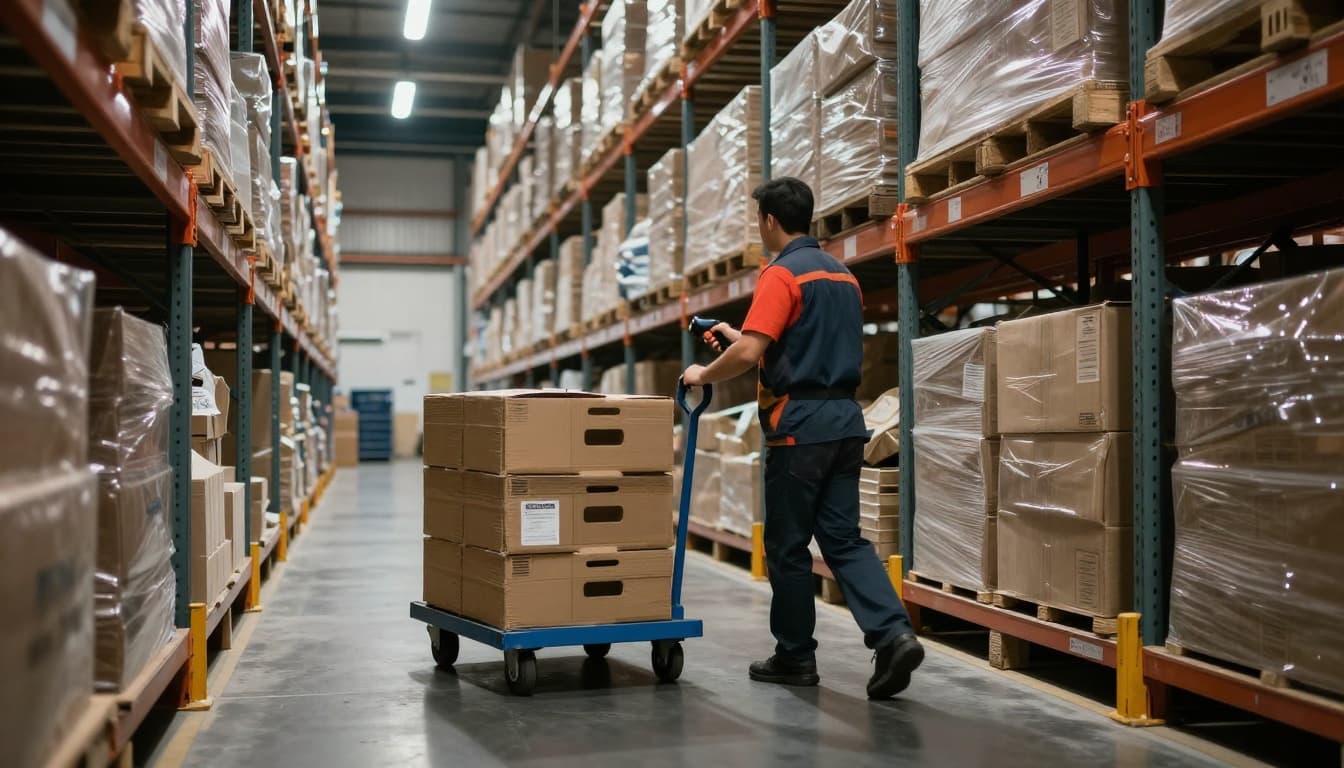
First, orders enter the system. Then the WMS sends pick tasks to the right people.
A simple, practical walkthrough
- Order arrives in the WMS
The system pulls order details and assigns pick tasks based on inventory availability. - Software plans an efficient route
It groups stops so pickers don’t bounce between far aisles. - The picker locates the shelf
Workers use bin labels, item location codes, or guidance from a scanner or station. - The picker grabs the exact quantity
This is where attention matters most. Picking the wrong count causes immediate mismatch. - Items get sorted into order totes
Each order has a place, so packing can run fast after picking finishes. - The picker scans to verify accuracy
A scan check helps push errors down. Many warehouses aim for under 1% picking mistakes when verification is strict and training is consistent.
Along the way, safety stays non-negotiable. Pickers should keep carts stable, follow aisle rules, and wear required PPE.
Tools you’ll commonly see on the floor
Most teams rely on a few basics:
- Handheld scanners for location and product verification
- Picking carts or lift trucks for moving totes and bins
- Totes, bins, or pallets to organize items by order
- RF displays or mobile terminals when work instructions show digitally
- Label systems so shelves stay easy to identify
Even with great tools, the process can still fail if people skip scans or rush because the route feels messy. That’s why picking method and layout decisions matter so much.
Picking Methods That Save Time and Cut Mistakes
Picking methods decide how you move through the warehouse. They also decide how much walking you do and how often you handle sorting. In most warehouses, the method matters as much as the tech.
If you’ve ever watched someone shop a crowded store with a list, you already get the idea. When the list follows a path, shopping feels smooth. When it doesn’t, you zigzag and waste time.
Different methods fit different order patterns. A method that works for small, unique orders may hurt you during high volume.
To compare choices for batching, zoning, and waves, this batch vs wave vs zone picking guide is a helpful reference.

Quick comparison: what each method does for you
Here’s a practical look at common picking strategies:
| Method | How it works | Best for | Main trade-off |
|---|---|---|---|
| Piece picking | One order at a time | Low volume, high variety | More walking between stops |
| Batch picking | Pick multiple orders together | Lots of similar items | Sorting takes time |
| Zone picking | Pickers stay in set warehouse areas | Large warehouses | Handoff coordination needed |
| Wave picking | Release work in timed waves | Peaks during the day | Planning must match demand |
| Cluster picking | One picker handles multiple orders in a tight area | Concentrated SKUs | More coordination at staging |
The best method isn’t always the fastest in isolation. It’s the method that keeps your whole operation balanced, from picking to packing to shipping.
Piece and Batch Picking for Everyday Orders
For many warehouses, piece and batch picking cover most “normal” order flow.
Piece picking means one order at a time. A worker follows the order’s list, picks each item, and moves on. It’s easy to manage because sorting stays simple.
The weakness is travel time. If an order pulls items from far corners, your picker zigzags all shift.
Batch picking picks multiple orders in one trip. For example, if ten orders all contain similar items, the picker can collect all the shared items together. Then the warehouse sorts into separate orders afterward.
Batch picking can cut travel dramatically, because fewer aisle trips get repeated. In many operations, batch or cluster approaches reduce travel time by up to 60%. However, the warehouse must handle sorting well. If the team can’t sort fast, you lose the benefit during packing prep.
A simple way to decide:
- If orders share many of the same products, batch pays off.
- If orders are very unique, piece can stay cleaner.
Zone, Wave, and Cluster: Handling High Volume
When order volume spikes, the warehouse needs control. Instead of treating every pick task as random, managers use zone, wave, and cluster strategies to match capacity to demand.
Zone picking divides the warehouse into areas. Pickers only work their zone. Then goods get staged for consolidation later.
Zone picking helps when the warehouse is large and cross-aisle walking kills productivity. Still, it adds coordination at handoff. If workers in different zones disagree on staging rules, packing can get messy.
Wave picking releases orders in timed “waves.” Orders with higher shipping priority get picked earlier. That helps meet carrier cutoffs and keeps dispatch steady.
Cluster picking groups multiple orders that share nearby storage locations. A picker handles several orders in one area, then routes items to the right staging bins.
These methods often work best in combination. In 2026, more warehouses use hybrid flows, where automation handles movement and humans focus on fast picking stations.
Tech Making Order Picking Smarter and Faster in 2026
Tech isn’t replacing picking as much as it’s reshaping it. In 2026, many systems aim to reduce walking, reduce search time, and increase accuracy through guidance and automation.
Also, labor pressure is real. Robots can run longer than shifts. Software can plan routes faster than a human can.
As warehouse automation trends continue, supply chain operators track tools like AI routing, mobile robots, and smart fulfillment systems closely. See top warehouse automation trends for 2026 for a broader view of what’s gaining momentum.

Automation Wins: Robots and AI in Action
Two big automation themes dominate modern order picking:
- Goods-to-person (GTP) robotics
Instead of a picker walking to shelves, the system brings items to the station. - Autonomous mobile robots (AMRs)
These robots move around the warehouse, carrying totes or shelves to where work needs them.
AI also plays a role. Instead of planning work only once at the start of a shift, AI-driven WMS can update tasks as orders and inventory change. It can adjust routes and wave releases when demand spikes.
Warehouses report strong gains with these changes:
- Automation can cut errors by up to 70% with the right controls.
- Pick accuracy often reaches 99% or higher with guided picking.
- Automated fulfillment can improve speed by up to 300% in some setups.
- Robotics adoption often targets higher productivity and fewer injuries, with many reports showing 25% fewer workplace injuries when robots handle risky movement.
Those results don’t show up by magic. They come from tight integration between the WMS, pick stations, and verification steps.
Hands-Free Tools Like Voice and Lights
Not every warehouse can install robots right now. That’s where hands-free tools help.
Pick-to-light uses lights at a station. A worker sees which location to pick next. It reduces searching and helps training go faster.
Voice picking sends instructions through a headset. The worker confirms actions by speaking back or scanning.
In fact, voice picking is a growing topic in 2026 automation discussions, including AI-driven voice picking when voice doesn’t just guide.
Why these tools matter:
- Workers spend less time hunting for items
- Verification becomes part of the flow
- Errors drop because the next step is always clear
The takeaway is simple. When picking gets guided, people move with confidence.
Best Practices to Perfect Your Order Picking
You can buy tech, but you still need good process. Best practices turn a decent setup into a reliable order picking operation.
Here’s what top warehouses focus on. If you want a longer checklist-style reference, this order picker best practices guide is worth bookmarking.
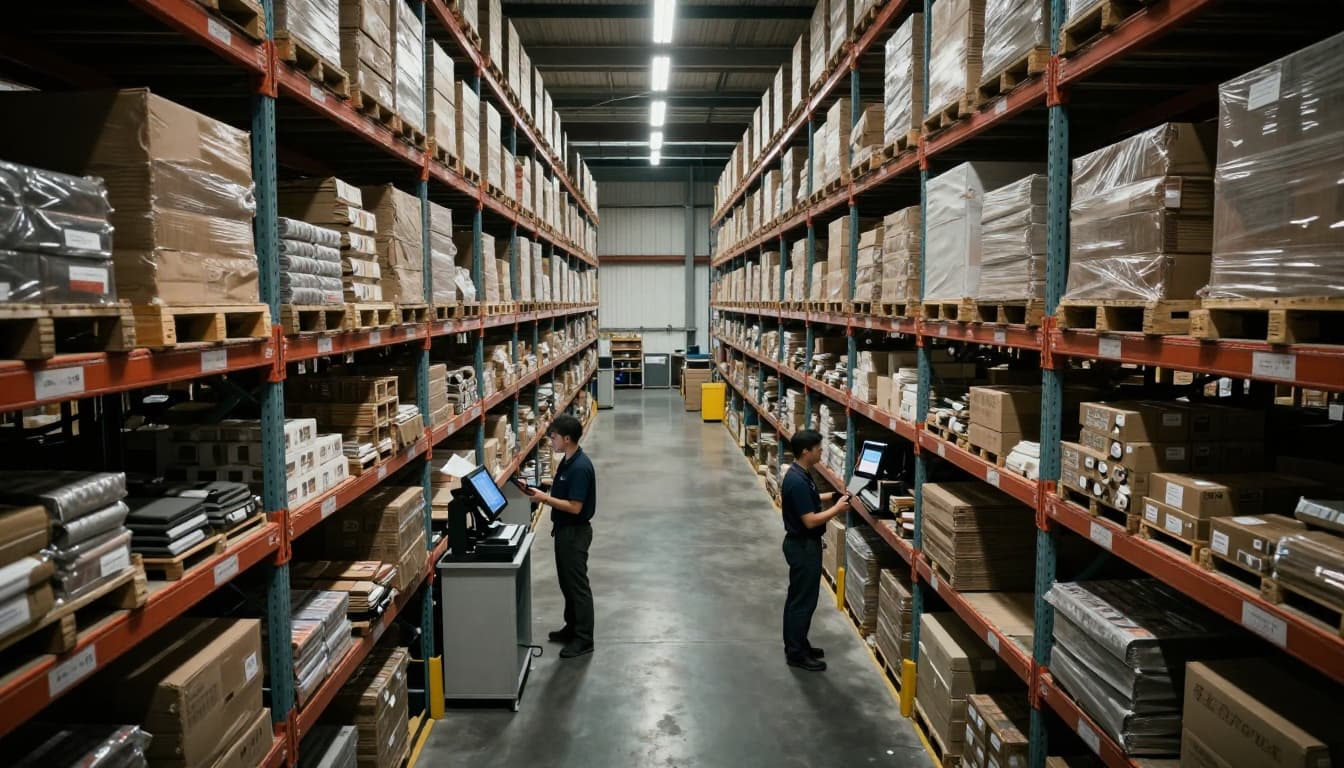
Do these things first
- Use your WMS for pick planning, not guesswork.
If routes aren’t planned by the system, travel waste grows fast. - Scan at every handoff.
Scanning is your last line of defense before packing and shipping. - Train for accuracy, then speed.
Speed without correct picks creates a rework cycle. - Match the method to your order mix.
High variety orders often do better with piece picking. Repeating patterns can benefit from batch or cluster. - Keep the warehouse layout logical.
Put high movers in reachable locations. Re-arrange when demand changes. - Track KPIs by stage, not one overall score.
Measure pick rate, error rate, and travel time. Then fix the bottleneck you actually see.
One more practical point: small layout changes can deliver big gains. For example, reducing cross-aisle movement lowers fatigue. Less fatigue usually means fewer mistakes.
Automation can push accuracy close to 99% when paired with scanning and clear station rules. Still, even a partially manual warehouse can improve quickly by tightening the basics.
Conclusion
Order picking is the work of selecting items from storage so customer orders can ship. It matters because it drives both speed and accuracy, and it often takes a huge slice of warehouse effort.
When you follow the core order picking process steps, use the right picking method, and verify scans carefully, errors drop and throughput rises. Then, in 2026, tech like robots, pick-to-light, and voice guidance can further reduce walking and rework.
If your goal is better fulfillment, start by auditing your routes and pick steps. Try one change, then measure results. And once you see progress, you can keep moving toward the automation wave that’s reshaping warehouses right now.