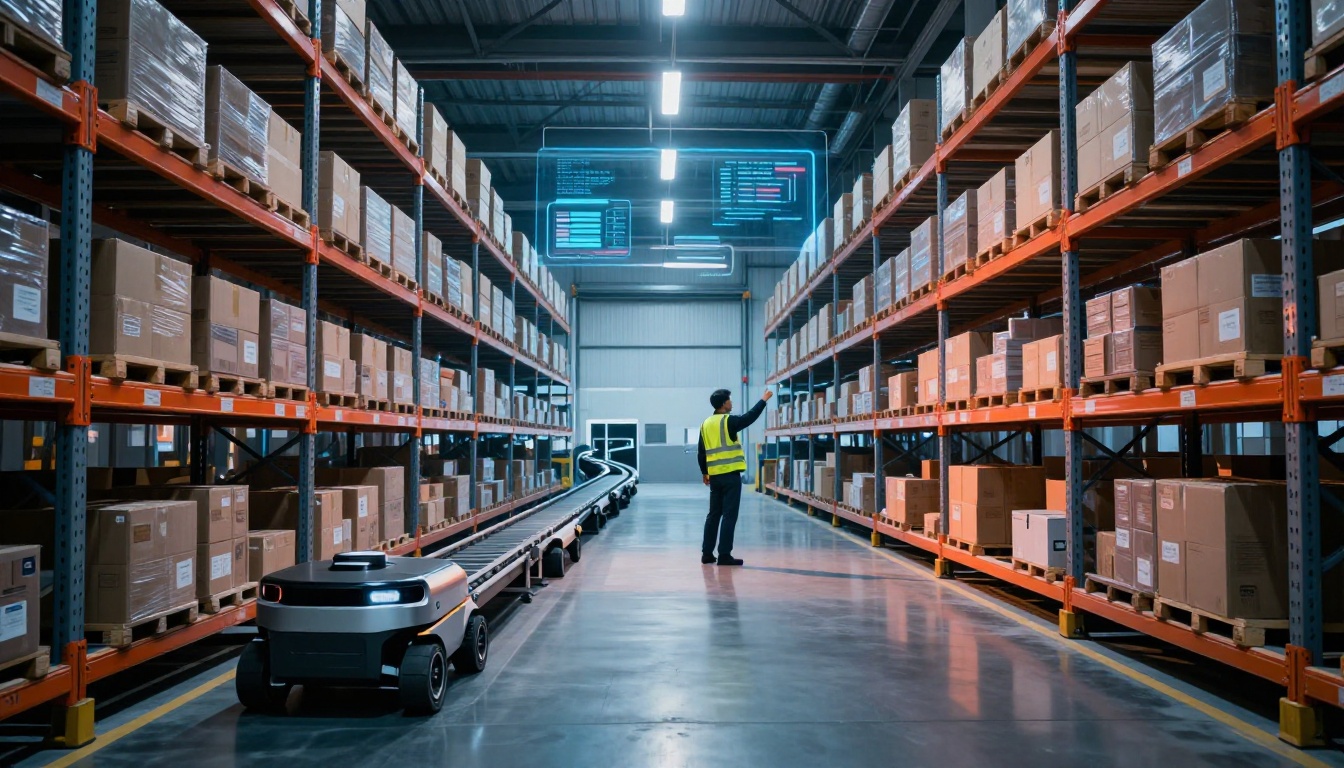
Customers expect same-day or next-day delivery now, even when they place an order late in the day. That kind of speed does not happen by luck. It happens because e-commerce warehouses run like tight systems, with the right item ready before your order exists.
In 2026, many facilities rely on AI forecasts, robots, and warehouse management systems (WMS) to move goods fast and avoid mistakes. Some teams even report around 40% faster pick-and-pack times after adding automation.
Here’s what you’ll learn next: how goods move from receiving to storage, how orders get planned in seconds, how items get picked quickly, how packing stays accurate, and how shipping and last-mile delivery stay on schedule.
Receiving and Storing Goods for Quick Access
Fast delivery starts long before you click “Buy.” It starts when products enter the warehouse and get placed where workers (and robots) can grab them quickly.
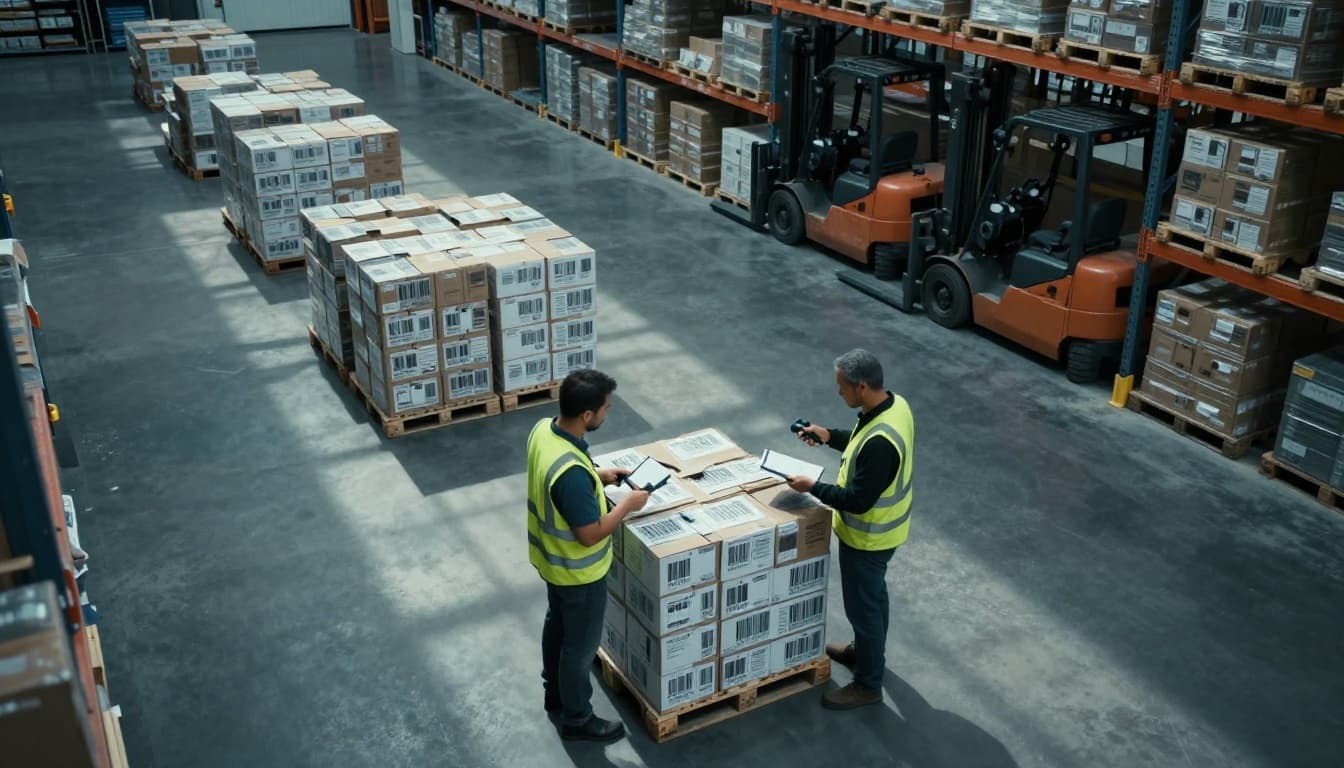
Suppliers send pallets to the fulfillment center. Then the warehouse team inspects items, counts them, and logs everything so the system knows the exact location. After that, goods move into a storage layout designed for speed, not just space.
Think of it like a kitchen. You don’t keep rare spices at the back. You place them near the stove, so cooking stays quick.
Most fast-delivery operations also use distributed stock networks. Instead of storing everything in one far location, they spread inventory across multiple sites. That reduces travel time and makes “near me” delivery possible.
At a high level, the process from inventory to shipping looks like this:
- Receive and inspect goods
- Store items in speed-friendly locations
- Plan each order instantly using WMS
- Pick and move items fast with less walking
- Pack correctly and hand off to carriers for last-mile delivery
To see how common fulfillment workflows fit into this bigger picture, you can review order process steps for 2026 as a helpful reference point.
Checking Incoming Inventory Right Away
When a shipment arrives, speed depends on accuracy at the very start. If the warehouse miscounts or logs items wrong, every later step slows down.
Teams typically do the following:
- Scan barcodes on boxes and pallets
- Match received quantities to the purchase or transfer order
- Flag damaged items for return or repair
- Record lot or serial data when needed
Many warehouses also use RFID for faster visibility. With RFID, systems can confirm what’s where without line-by-line scanning. Either way, the goal is the same: log it correctly the first time.
Then comes a quality check. A broken unit in storage becomes a problem later during picking. So teams check for damage early, not after an order fails.
This also ties into WMS behavior. Once items are verified in the system, WMS can trust location data. That matters because the next step is planning picks and routes.
If you want a deeper look at how warehouse process improvements reduce outbound errors, check warehouse process optimization for order fulfillment.
Placing Items in Speed-Friendly Spots
Now the warehouse decides where inventory lives. This is where fast delivery gets built into the layout.
A common method is ABC analysis. High-sellers (A items) get prime locations near picking stations. Medium sellers (B items) go next. Low sellers (C items) get stored farther away or higher up.
After that, teams group storage by how items are used. For example:
- Small parts near packing for quick kitting
- Heavy items near docks and pick staging
- Fragile goods in safer rack positions
In 2026, AI demand prediction plays a bigger role. If sales trend shifts, AI can recommend moving or replenishing stock so top items stay near the action. That can include changing slotting rules, not just restocking.
Another speed lever is micro-fulfillment. These are small, local centers placed closer to customers. When inventory sits closer, last-mile trips shrink, so delivery windows widen.
Micro-fulfillment networks are spreading beyond just the biggest brands. For a look at how these networks help mid-market and DTC teams deliver faster, see micro-fulfillment networks for same-day delivery.
When a warehouse uses distributed inventory plus smart slotting, pick times drop. Workers walk less. Robots travel less. WMS plans cleaner routes because the fastest locations stay stocked.
When Your Order Arrives: Instant Planning
You place an order online. Then the work really begins inside the warehouse system.
Modern checkout triggers near real-time updates. Your order flows into WMS, and WMS checks stock availability. It also checks which items are reserved or in transit. If an item is low, it can trigger replenishment, so inventory stays ready.
Then WMS builds a plan. That plan focuses on three things:
- Where each item sits
- How to reduce travel distance
- How to meet delivery deadlines
Fast delivery types have different deadlines. Same-day needs urgency from the moment the order hits. Next-day needs tight batching and clean handoffs. Two-day usually offers more flexibility, so the system can bundle orders efficiently.
AI helps with forecasting too. Some systems use signals like weather, local events, and trending items to adjust pick priorities. If storms hit, delivery routing and carrier handoffs can shift. If a product trend spikes, replenishment runs earlier.
Also, order data usually connects with an order management system (OMS). That connection keeps customer promises aligned with what the warehouse can actually ship.
For smaller sellers, a 3PL (third-party logistics provider) can be a practical option. Instead of building the whole setup, they rent the capacity. It can make sense for businesses shipping a few hundred orders per month, especially when they want fast delivery without hiring more staff.
Generating Pick Lists and Paths
Once WMS knows what’s in stock, it creates pick lists. Then it groups orders based on time and workflow.
A big win comes from batching. Rather than sending workers to pick one order at a time, WMS can create waves. A wave groups orders for a specific time window, like “ship by 5 PM” or “next run for same-day.”
Time-based wave picking helps keep labor steady. It also reduces system back-and-forth. For urgent orders, WMS can prioritize urgent picks first, while still grouping similar items together.
WMS also designs paths. If the fastest item locations are spread across the warehouse, WMS weighs that travel cost. It can reorder picks so a picker stops in the most efficient sequence.
So your order does not just become a list. It becomes a route plan.
Picking Items Without Wasting a Second
Picking is usually the biggest time drain in fulfillment. That’s why fast delivery setups treat picking like the center of gravity.
If workers waste steps, everything slows. So warehouses use methods that cut movement and reduce errors.
Common picking styles include:
- Single-order picking (best for low volume or special cases)
- Zone picking (each worker picks within a zone)
- Batch picking (one trip covers multiple orders)
- Wave picking (orders pick in timed waves)
- Kitting (grouping components for a bundle)
In 2026, automation also joins the pick floor. Autonomous mobile robots, automated carousels, and assisted picking all reduce the “hunt time” that kills speed.
Some warehouses also use scanners at every step. When scanning is enforced, the system catches mistakes before packing. That prevents the slower fix cycle later.
For same-day shipping, micro-fulfillment adds another advantage. When stock is nearby, pickers and robots can focus on a smaller area. That makes routes shorter and reduces idle time.
Picking Methods That Boost Speed
How do you pick faster without lowering accuracy?
Often, the answer is choosing the right method for your order mix.
- Batch for multiple orders: When many orders include similar items, batch picking reduces trips. One scan sweep can feed multiple cartons.
- Zone per worker: When each worker handles one area, movement stays limited. Then the warehouse routes full totes to the next station.
- Waves for timed groups: When deadlines are strict, waves reduce chaos. Workers know what belongs to “this run.”
The key is match the method to demand patterns. If you batch incorrectly, you get confusion. If you zone too much, you may create bottlenecks at handoff points. Good WMS planning decides what works today, not what worked last quarter.
Robots and Tech Taking Over Picks
Robots help most where speed depends on steady flow.
Autonomous mobile robots can move shelves or totes toward pickers. That means the picker stays in one place while the inventory comes to them. It’s like a grocery store where the shelf rolls to your cart.
Robots also help at replenishment. When items run low, robots can restock racks faster than waiting for manual pulls. AI can also guide replenishment timing based on forecasted demand.
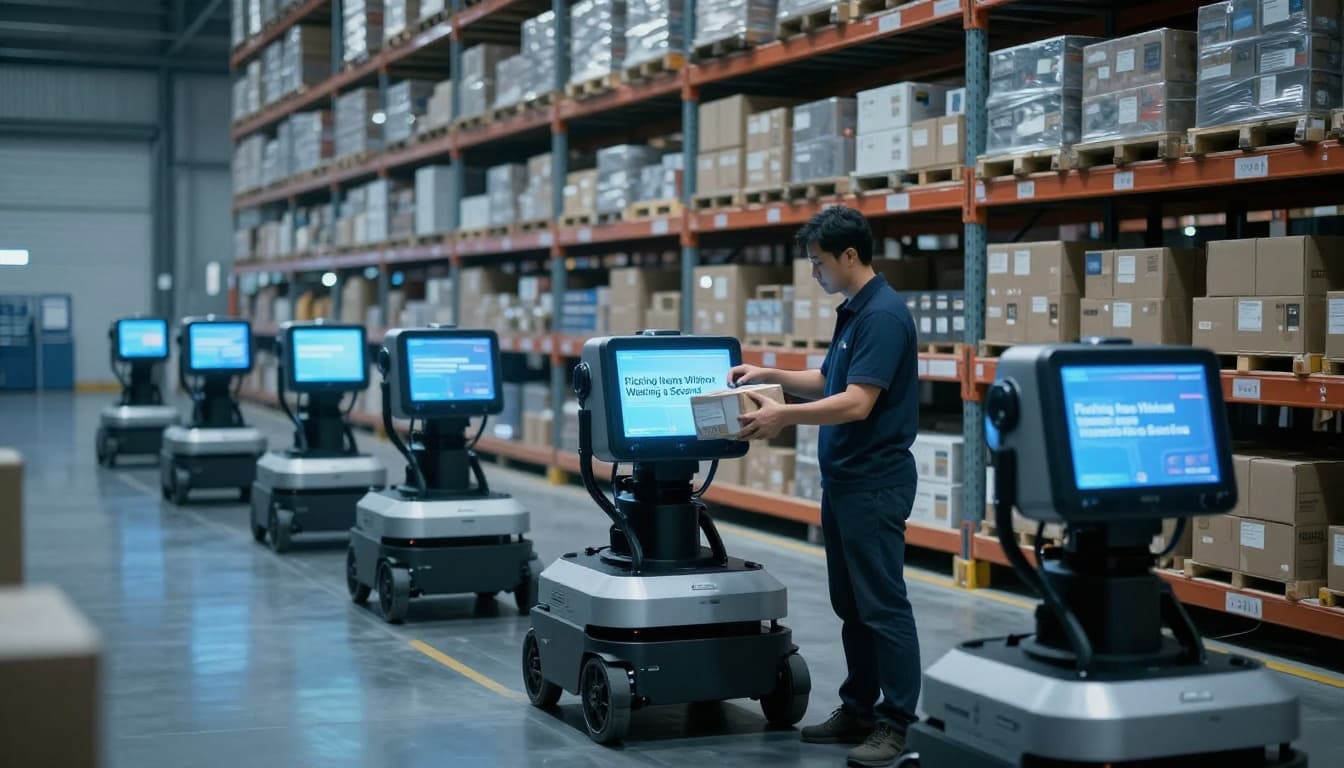
Scanners matter too. With every pick, workers scan item IDs. WMS confirms the scan matches the order. If it doesn’t, the system blocks packing until it’s corrected.
For a look at modern robots designed for “robots-to-goods” fulfillment, you can explore Locus robots and autonomous fulfillment.
That combination, smart placement plus guided picks, cuts pick time and reduces rework. And rework is what turns “same-day” into “not today.”
Packing Orders Right the First Time
After picking, you’re not done. Packing decides whether the order actually ships on time and whether it arrives in the right condition.
Packing stations connect directly to WMS. That means WMS prints labels, shows what should be packed, and tracks pack confirmation. Many systems use scan-to-verify steps before sealing.
This is where automation helps, too. Some warehouses run automated pack stations or use machines for labeling and carton closing. Others use semi-automated conveyors that move totes to packers.
A common goal is packing accuracy at scale. Some facilities target 99%+ scan-verified accuracy by design.
Fast packing also depends on packaging choices. Right box sizing reduces wasted material and speeds sealing. Void fill systems help protect items without slowing the station down.
Kitting can boost speed here. If you already picked a bundle of parts, packing becomes assembly plus sealing. It also reduces the chance of missing components.
Vertical lifts help when inventory sits high. Instead of forcing packers to hunt for dense items, lifts bring them to the right workstation height. That keeps the station moving.
Verifying and Labeling at Pack Stations
This step is simple, but it must be strict.
At the pack station, the worker typically:
- Places items into the box
- Scans each item or the tote contents
- Confirms the shipment match in WMS
- Prints and applies the label
- Scans again before sealing, then confirms the final packed weight or carton ID (when required)
The scanner is the last line of defense. It stops wrong-item packing before the carrier accepts the package.
Once packing completes, WMS updates the order status. Then shipping routing can start without waiting.
Shipping and Last-Mile Delivery Breakdown
Shipping looks like a handoff, but it’s really a set of planning decisions.
First, warehouses sort packages based on carrier or route. Then they route them to the right pickup points. Some facilities use automated sortation systems, which group packages by destination fast.
From there, packages go to partners like UPS, USPS, or local carriers. The handoff matters, because a missed scan or wrong label can cause delays.
Then last-mile delivery turns the plan into motion. Drivers follow route rules. Carriers scan at key points. Customers get tracking updates as the package moves closer.
Here’s how speed options often differ in practice:
| Delivery option | Where stock helps most | What gets optimized | Typical outcome |
|---|---|---|---|
| Same-day | Micro-fulfillment centers near cities | Fast picking, quick packing, local courier handoff | Tight delivery windows |
| Next-day | Distributed regional sites | Batching, carrier pickup timing | Reliable morning or evening delivery |
| Two-day | Regional fulfillment and smarter routing | Sortation and fewer route changes | Good balance of speed and cost |
Routing uses real-time signals. Some systems factor in road conditions, traffic patterns, and carrier network capacity. Carriers also invest in electric vehicles (EVs) for parts of fleets, especially in dense areas where stop-and-go driving is common.
WMS can link with carrier systems. That helps it schedule pickups and protect delivery promises. When carrier acceptance happens on time, tracking updates remain accurate.
For big players, robot hubs and advanced sorters help at volume. For smaller brands, 3PLs provide flexibility. The 3PL already has carrier relationships and warehouse routines for speed.
Sorting and Partnering with Carriers
Sorting is a mechanical step that has huge timing impact.
Automated sorters can take cartons from a conveyor and route them to the right lane for destination. That reduces manual “find the right truck” work. It also reduces labeling errors.
Partnerships matter here too. Some carriers offer express windows, while others focus on cost. The warehouse and the 3PL pick what fits the service level your customer buys.
When a warehouse keeps sorting fast, carriers get packages when they plan to scan them. That keeps tracking clean and delivery timelines more stable.
Secrets to Same-Day, Next-Day, and Two-Day Wins
The secret is not one magic switch. It’s a chain of small wins that stay linked.
For same-day, the warehouse must protect the whole chain. Items need to be in the right nearby facility. Picking must run in waves. Packing must scan-verify quickly. Then the handoff to local carriers must be timed tightly.
For next-day, the system can plan slightly wider windows. It still uses WMS to bundle orders efficiently. However, it focuses more on batch size and carrier pickup schedules.
For two-day, warehouses can optimize more for cost and flow. They still move quickly, but they don’t need the same extreme urgency.
Weather and trends help all three. If demand spikes, replenishment and picking priorities adjust. If conditions change, routing and carrier options can shift.
The results show up in what customers feel. Fewer delays. Faster arrival. More confidence when they order late.
Conclusion: The “Magic” Is Just Good Systems
Your same-day or next-day order happens fast because the warehouse runs ahead of time. Receiving teams log inventory early, storage puts items in reach, WMS plans routes quickly, and pack stations scan to verify before labels go out.
Automation and AI help most where time leaks. Robots reduce walking and replenishment waits. WMS reduces picking mistakes. 3PLs add extra capacity when you need it.
When customers say the delivery feels “effortless,” that’s usually a sign the system is doing its job. If you want to understand what makes your favorite stores fast, watch for the quiet details behind the scenes.
Have you ever noticed how some stores deliver fast even when demand looks heavy? That’s often the biggest clue that order processing is built for speed.