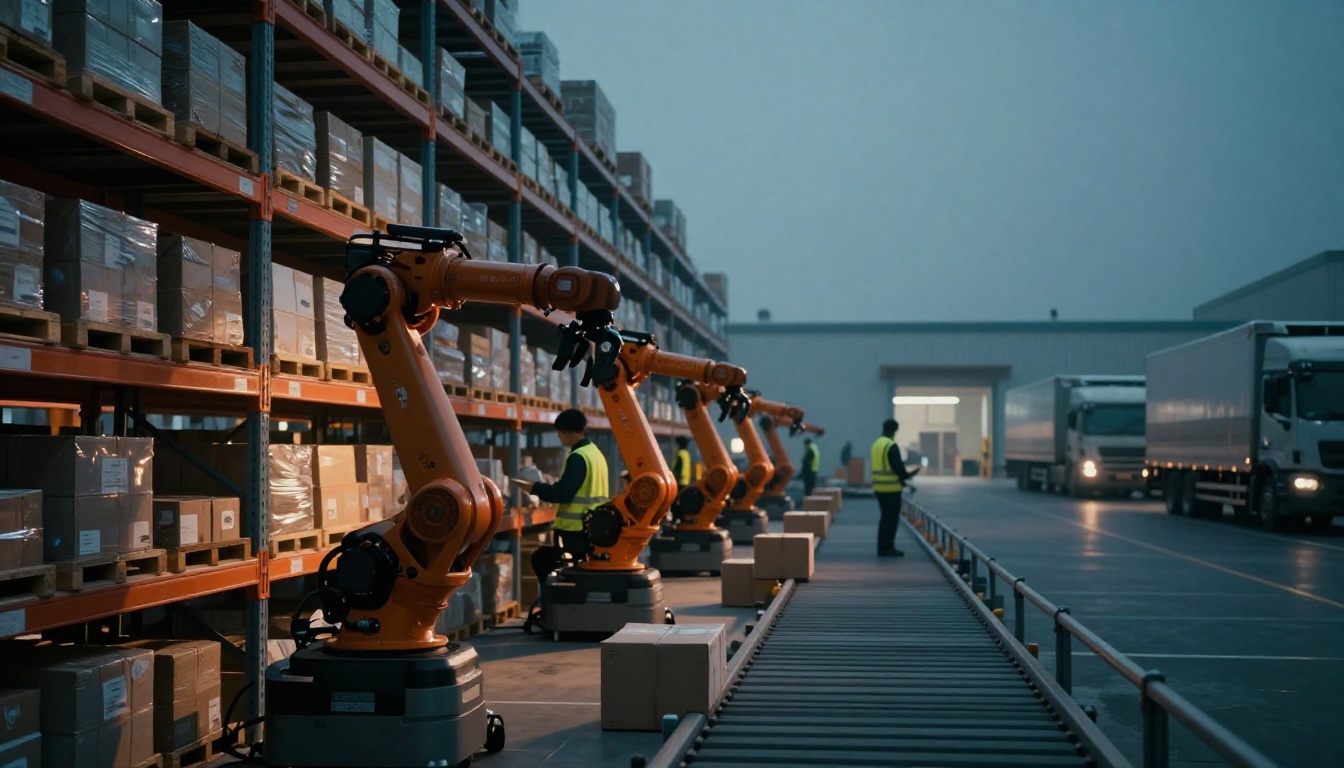
You order something online, then it shows up the next day. Chances are, a distribution center made that quick turn possible.
A distribution center is a short-term logistics hub that receives goods, sorts them, picks items, packs orders, and ships them out fast. Unlike a long-term warehouse, it focuses on movement. Products may stay only hours or a few days, depending on demand.
So what’s the role of distribution centers in the real world? They act like bridges in the supply chain. They connect factories, trucks, retail stores, and customers, while keeping orders accurate and on time.
In the sections below, you’ll see what happens inside a distribution center on an average day, why it matters for modern supply chains, and what teams struggle with. You’ll also get a look at 2026 trends like automation, AI planning, and more eco-focused operations.
How Distribution Centers Handle the Heavy Lifting Every Day
Walk into a busy distribution center and it can feel like a beehive. Docks open and close. Pallets roll by. Scanners beep. Orders flow toward trucks and routes, all day long.
The core job is simple: keep goods moving in the right order, to the right place, at the right time. Speed matters because customers expect fast shipping, and businesses lose money when orders sit too long.
Most modern DCs work with software too. They use a warehouse management system (WMS) to track inventory in near real time. As a result, teams avoid guessing and rely on scan data for sorting, picking, and shipping. For a clear breakdown of how DCs store finished goods and prepare them for shipment, see NetSuite’s distribution centers explanation.
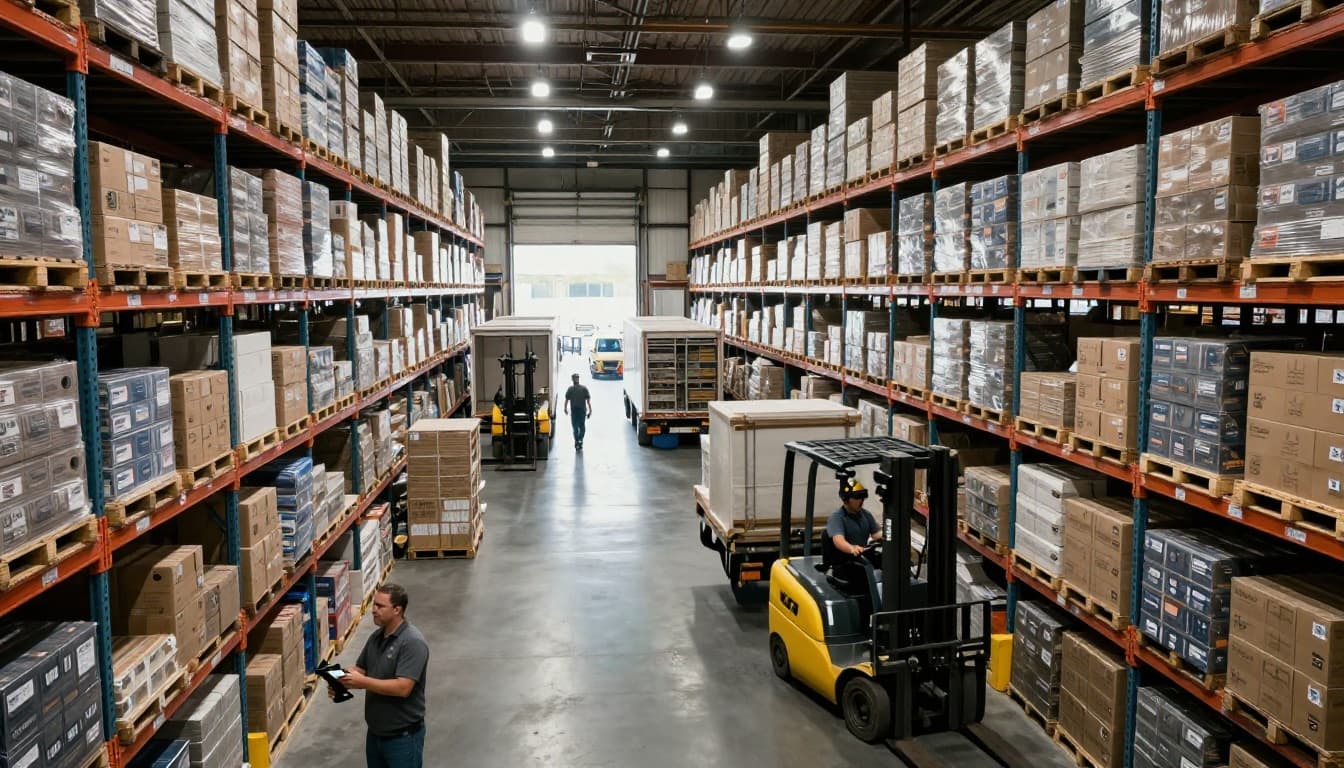
Here’s how the flow usually goes, from the moment trucks arrive to the moment outgoing loads leave:
- Receive inbound shipments and confirm counts
- Sort items based on where they’ll go next
- Store briefly (or cross-dock when possible)
- Pick items for specific orders
- Pack and label for accurate delivery
- Ship using planned routes and loading schedules
In 2026, efficiency goals are tight. Recent implementations reported order throughput up more than 20% and cost cuts up to 12%. Those gains often come from better scan discipline, improved pick paths, and fewer rework loops.
Receiving Goods and Keeping Inventory in Check
Receiving is where quality and accuracy start. Trucks pull into the dock. Workers unload pallets and cartons. Then they scan barcodes and confirm what arrived.
Next comes inventory control. The DC assigns items to the right location, or it updates records for rapid sorting. If a product is missing, damaged, or mis-labeled, receiving is where teams catch it early.
Why does this matter? Because bad inventory data can cause the most expensive problem in logistics: a stockout you do not realize until customers already ordered.
During high-volume weeks, like holiday season, this step gets extra attention. Teams may use more shifts, add temporary staff, and tighten scan checks. Also, software helps keep counts aligned, so the pick team doesn’t chase phantom inventory.
In simple terms, receiving is the DC’s way of saying, “We know what we have, and we know where it is.”
Picking, Packing, and Value-Added Touches
Once goods enter the active workflow, orders start moving. Picking is the step where items get pulled from shelves or from staging areas. In many DCs, workers use carts, ladders, or lift equipment. In others, robots bring items closer to people.
Packing turns a box of loose products into a ready-to-ship order. Workers group items, add protective materials, and attach correct labels. Most teams also run quick checks to reduce shipping mistakes.
Some distribution centers go further with value-added services, such as:
- Kitting (bundling related items)
- Re-labeling for store or carrier rules
- Adding inserts like instruction sheets
- Preparing returns or exchange orders
These tasks help companies match different customer needs without changing every production run. For a “behind the scenes” view of how DCs transform inventory into customer orders, check how distribution centers work.
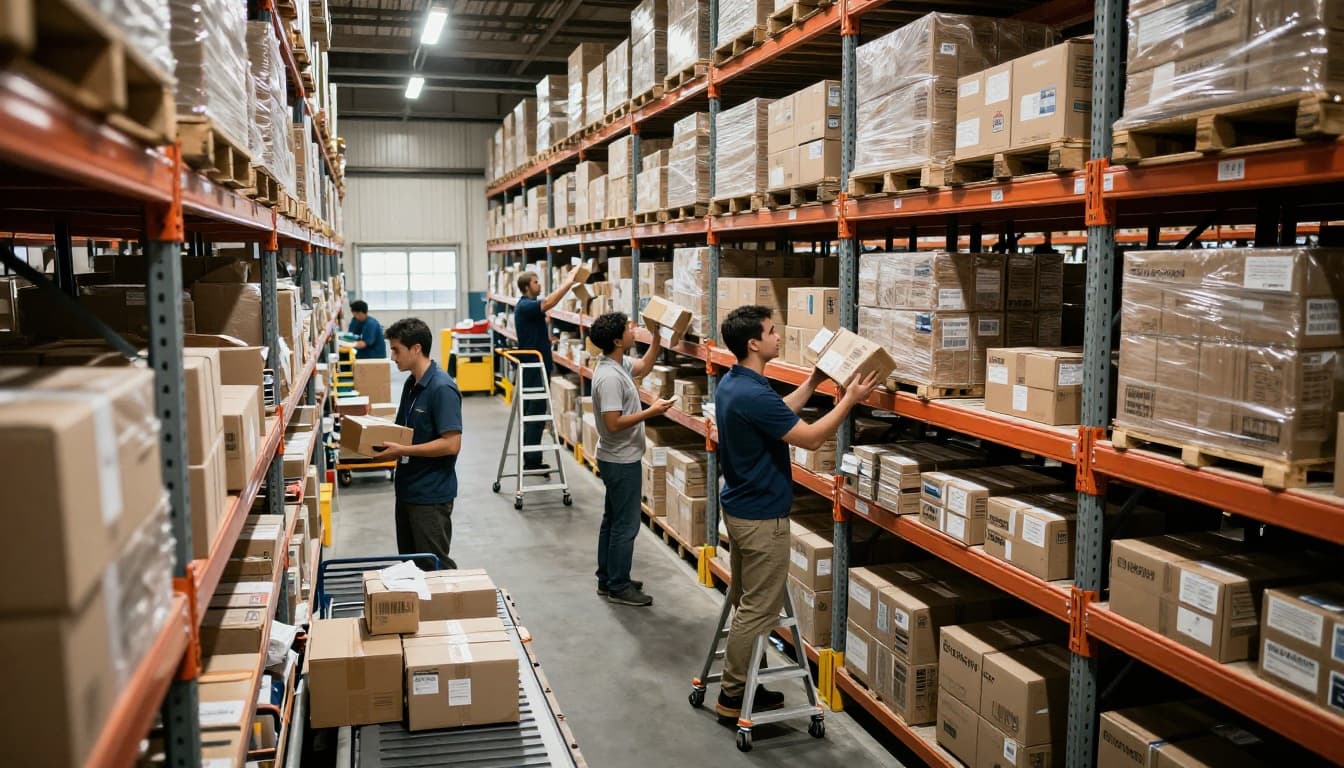
When picking and packing work well, customers feel it. The package arrives right, the label scans cleanly, and the order looks neat, not rushed.
Shipping Out with Speed and Smarts
Shipping starts with staging. Orders get grouped by carrier, destination, and service level. Then teams load outgoing trailers and route trucks based on dispatch schedules.
This is where route optimization and cross-docking show up often. Cross-docking means goods move from inbound loading to outbound loading with little or no storage time. So products skip extra handling and reduce the chance of delays.
Even when storage happens, DCs still try to keep waits short. If an order waits too long, it can miss the cut-off window for same-day or next-day delivery.
In 2026, many operations teams also use live updates to react faster. For example, if a truck arrives late, the system can adjust pick waves and loading plans. That helps teams protect delivery promises without frantic last-minute scrambles.
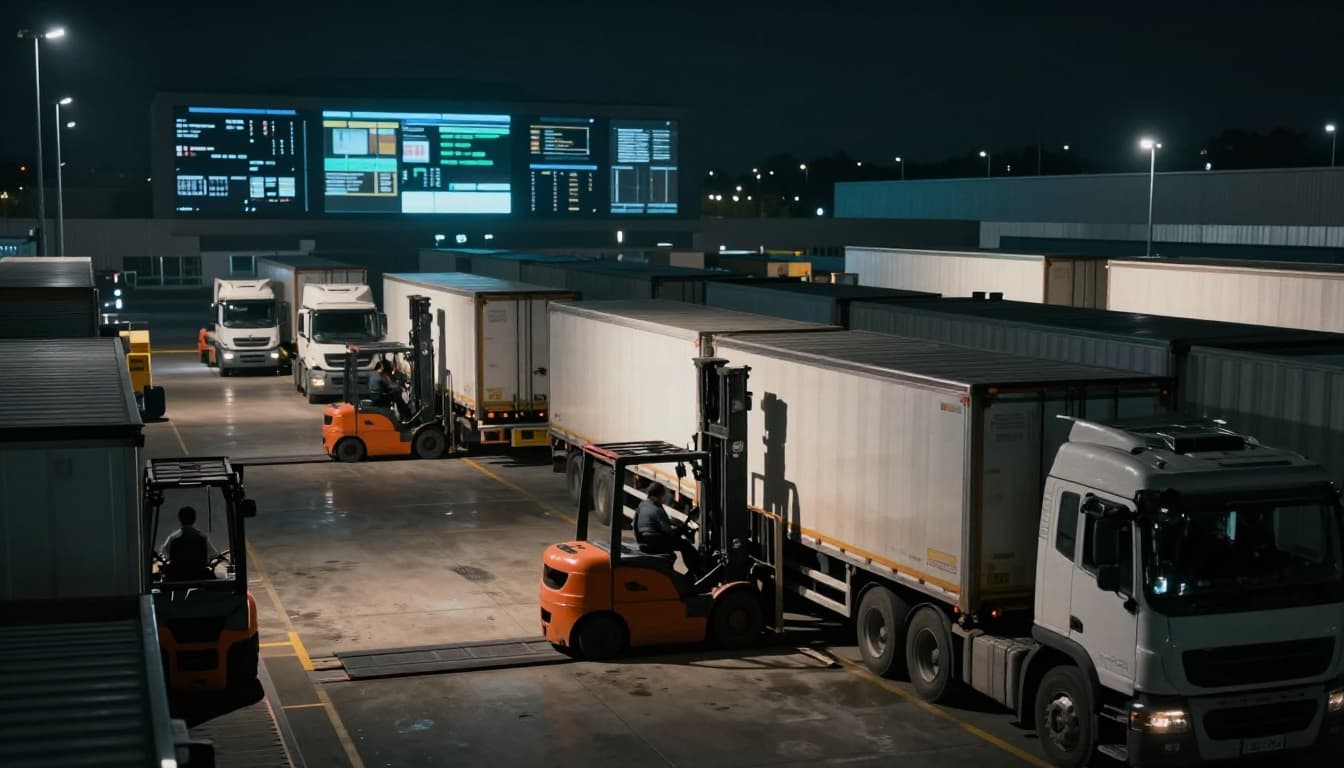
The simple takeaway is this: distribution centers don’t just store goods. They plan the path from dock to door.
Why Distribution Centers Power Modern Supply Chains
Distribution centers are one reason supply chains feel “faster” to shoppers. But the real impact goes beyond customer delight.
A DC helps companies scale without rebuilding everything each time demand changes. It supports growth, protects service levels, and absorbs order spikes that would overwhelm a single warehouse.
Many businesses also need a mix of channels: online orders, store replenishment, and sometimes wholesale shipments. A distribution center can handle those streams from one location, using the same receiving and outbound workflow.
In 2026, teams face higher expectations for accuracy and speed. They also face pressure to do more with less. As one warehouse performance guide puts it, DCs now get hit with “orders move faster” demands and higher needs for flawless execution. For more on the services DCs provide inside warehouse networks, see distribution services in a warehouse.
Boosting Speed for Happy Customers
Speed is not just about getting a package out. It’s about meeting promised delivery windows.
Distribution centers shorten the distance between products and the people who need them. Regional DCs mean fewer miles for last-mile delivery. Meanwhile, e-commerce-focused centers help businesses ship single orders quickly, not just full pallets.
That’s why many shoppers feel like online checkout “just works.” Behind the curtain, the DC keeps orders moving through timed pick waves, accurate labels, and scheduled truck loading.
Some brands build services around next-day delivery expectations. Whether you call it fast shipping or quick fulfillment, the foundation is the same. A distribution center turns inventory into ready-to-ship orders on tight timelines.
Cutting Costs Without Cutting Corners
Cost control is the other big reason DCs matter. When products move efficiently, businesses spend less on storage, labor waste, and rework.
Here are common ways distribution centers reduce cost:
- Shorter storage time lowers warehouse fees
- Batch picking and smarter wave planning reduce idle time
- Combined shipments cut extra handling
- Better accuracy reduces chargebacks and reshipments
Also, a DC frees space in longer-term storage areas. Instead of keeping everything “just in case,” companies can stage items near outbound lanes when demand rises.
That balance matters, especially when demand is uneven. A distribution center gives you flexibility. It can prepare for spikes, then slow down when orders drop.
The best part is that cost savings do not have to mean sloppy service. In fact, in 2026, accuracy stays a top priority because customers expect perfect, on-time deliveries.
Real Challenges Distribution Centers Face Today
Distribution centers are busy for a reason, but that busyness creates real problems.
First, there’s labor pressure. Short staffing can slow receiving, picking, packing, and shipping. It also increases stress. When people rush, errors rise. Even a small rise in errors can lead to delays, refunds, or customer complaints.
The second challenge is safety. Forklifts, conveyors, ladders, pallet stacking, and crowded aisles all bring risk. Safety training helps, but turnover and rush periods can strain compliance.
Third comes coordination and transportation. A DC can be efficient inside its walls, yet still get thrown off by late inbound trucks, weather delays, or carrier pickup problems. That mismatch can break promises.
In 2026, labor shortages show up in multiple supply chain forecasts. SPS Commerce points to labor constraints and rising pressure on warehouses, with robotics used as one response to fill gaps. See 2026 supply chain trends on labor and warehouse constraints.
So what helps? Practical steps, not perfect plans:
- Training that repeats (not one-time onboarding)
- Tech that reduces manual rework, like barcode scans and guided pick paths
- Clear safety rules, enforced at peak volume
- Better scheduling, so teams aren’t always running on overtime
Even with those fixes, challenges stay. Still, distribution centers keep improving. When ops teams use data and upgrade processes carefully, they can handle fast demand without losing control.
Exciting Trends Transforming Distribution Centers in 2026
In 2026, distribution centers look less like simple storage buildings. They’re becoming smarter operation centers.
Automation and AI are two of the biggest drivers. They speed up repetitive work and help teams plan routes, staffing, and inventory moves. At the same time, many DCs push for greener practices. That includes cutting waste, lowering energy use, and reducing unnecessary travel within the facility.
From warehouse automation reporting, one consistent theme is that robotics and AI planning keep expanding in real deployments, not just pilots. For a roundup of automation trends being discussed for 2026, see warehouse automation trends for 2026.
Automation and Robots Taking Over Repetitive Tasks
Robots won’t replace every worker. But they do take over repetitive parts of the job.
For example, robotic systems can move pallets, feed items into pick zones, or shuttle goods between storage and staging. Some setups use autonomous mobile robots to reduce walking and waiting. Others use “goods-to-person” approaches, bringing items to workers instead of forcing workers to hunt through aisles.
This matters during peaks. When orders spike, a DC cannot always hire fast enough. Automation helps protect throughput and reduce fatigue-related mistakes.
Another benefit is better flow. Robots can follow set routes and repeat tasks consistently. Then workers focus on packing quality, exception handling, and customer-specific steps.
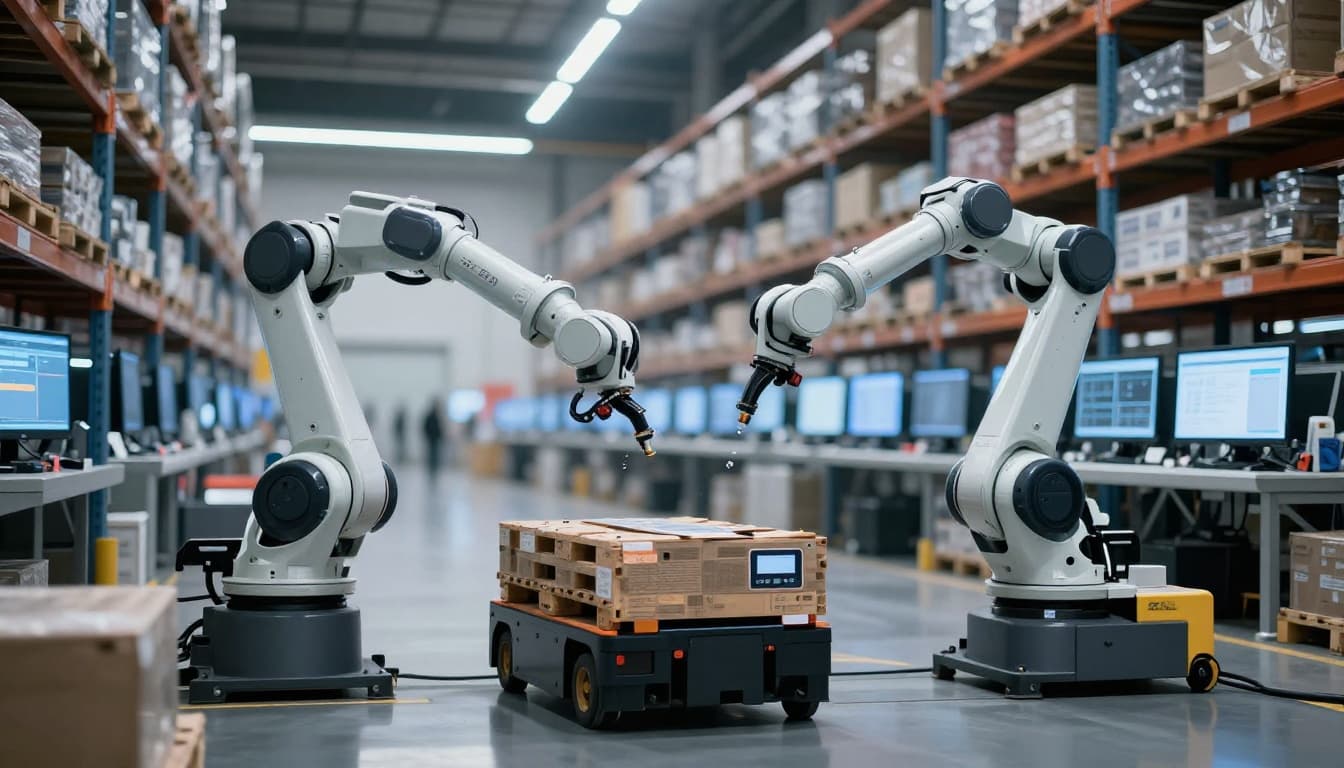
In 2026 reports, robotics and automation are also linked to efficiency gains like reduced travel time for workers, plus faster sorting. Some operations see robots help cut floor walking a lot, which can also reduce energy use.
AI Smarts for Smarter Operations
AI adds a planning layer on top of day-to-day execution.
Instead of only reacting to what happened, DC systems can predict what will happen next. Demand forecasting helps prevent empty shelves and overstock. Real-time inventory checks also reduce “found it later” issues.
AI can support pick planning too. If an order mix changes, the system can adjust pick paths, labor assignments, and batch sizes. It can also help dispatch teams by flagging route and timing risks early.
Some operations also use AI for tracking and decision support. For example, when truck arrivals shift, the system can recommend updates to the loading schedule. That keeps outbound flow steadier.
Even when AI doesn’t physically do the work, it helps humans make better choices faster. The result is fewer delays and fewer corrections.
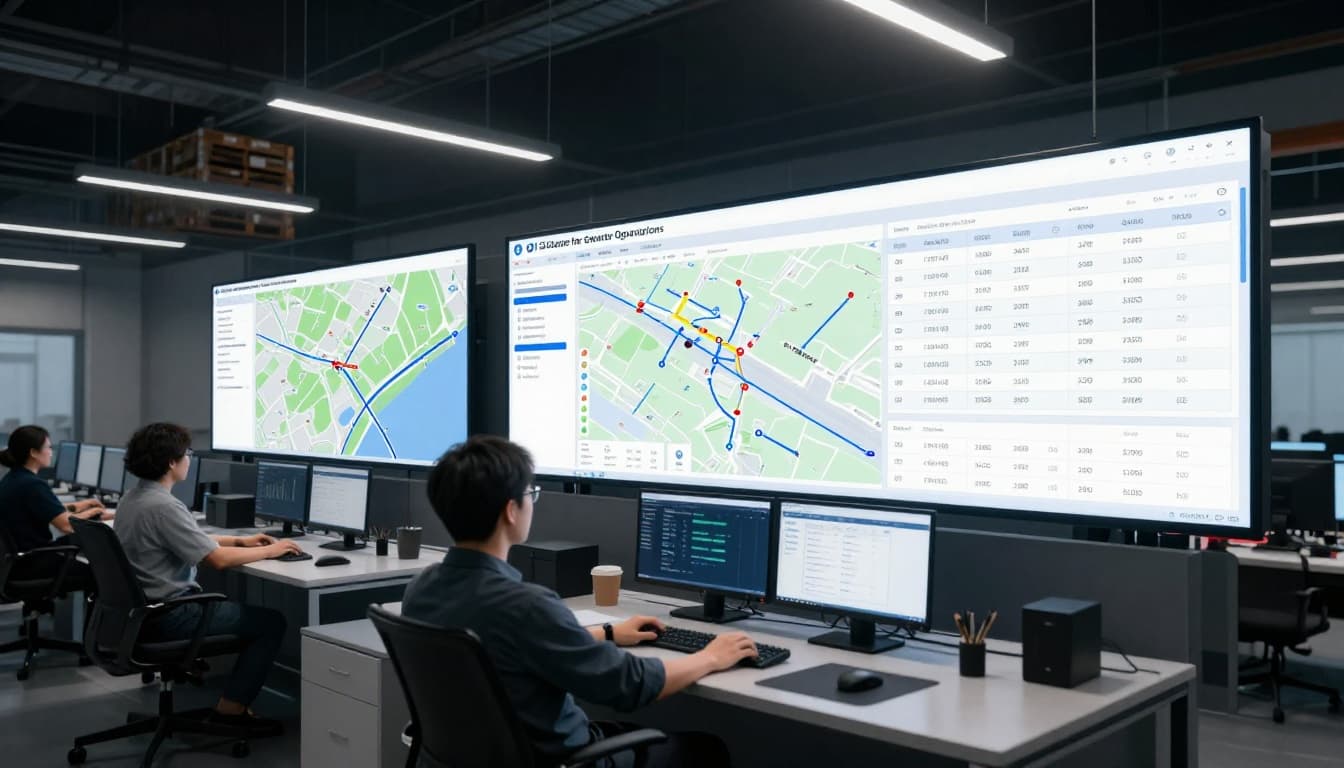
In 2026, that combination matters. Automation handles motion. AI supports decisions. Together, they help DCs keep service levels even when demand gets messy.
Conclusion: The Role of Distribution Centers Isn’t Just Storage
The role of distribution centers comes down to one idea: movement with control. They receive goods, keep inventory accurate, pick and pack orders fast, and ship out with smart planning.
When a distribution center performs well, customers get faster deliveries and fewer mistakes. Businesses also gain flexibility, so they can handle demand spikes without building a new operation every time. Even with today’s challenges like labor shortages and safety risks, many teams improve results through training, tech, and better workflows.
In 2026, automation and AI are making DCs more efficient. That’s why modern supply chains feel faster than they used to.
If you’ve worked in logistics or you’ve felt a delivery delay firsthand, share what broke or what worked. What part of the DC process should get the most attention in your operation?